Reading this history: “Ancestor” in the page title should be read as a comparison of imagery, not a demonstrated chain of invention. No primary evidence establishing a Roman game called Rota Fortunae as the direct ancestor of roulette is supplied here.
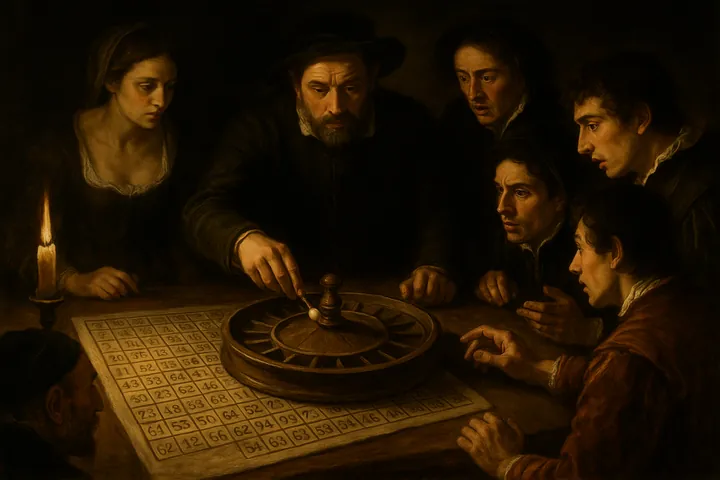
Rota Fortunae, the Wheel of Fortune, is a powerful image of changing luck. A turning wheel can lift one person and bring another down. That makes it a useful way to discuss the appeal of chance, but a symbol in philosophy is not itself a documented casino game.
Rota Fortunae: Fortune as a turning wheel
In Book II of The Consolation of Philosophy, Boethius uses Fortune’s wheel to explore the instability of prosperity. This is a primary literary source for the metaphor. It does not describe the numbered pockets, ball, payouts or betting layout of roulette.
The casino connection: a visual analogy
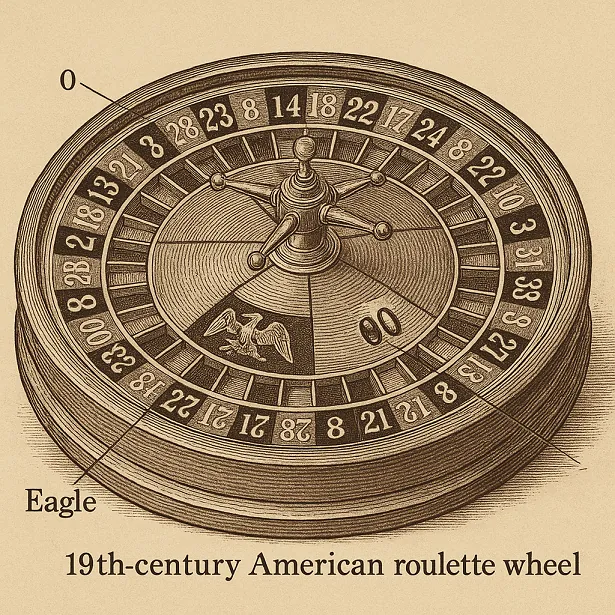
Roulette also makes uncertainty visible through a rotating wheel. That resemblance explains why the two are often discussed together. It cannot, on its own, establish that roulette’s inventors copied a Roman gambling device.
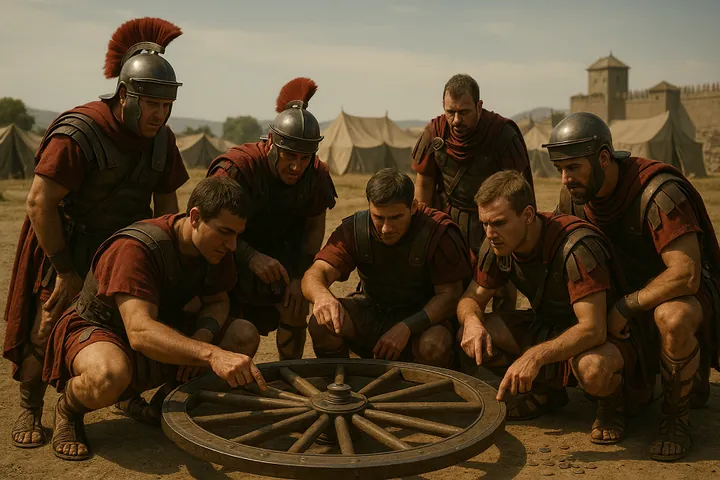
Stories about soldiers spinning shields or chariot wheels need an identifiable ancient text or archaeological context before they can support a historical claim. The earlier version of this article presented such a story too confidently; it should be treated as unverified here.
What would demonstrate a historical connection?
A documented line of development would require dated evidence linking equipment, rules or named games over time. Similar appearances can also arise independently. Keeping that distinction visible allows us to appreciate an analogy without turning it into a claim of direct ancestry.
Read the later history of roulette
Our history of roulette examines the later wheel and number-betting traditions. Modern digital roulette tables belong to that later history. Fortune’s wheel remains a useful cultural comparison, rather than proof that modern players are playing an unchanged Roman game.