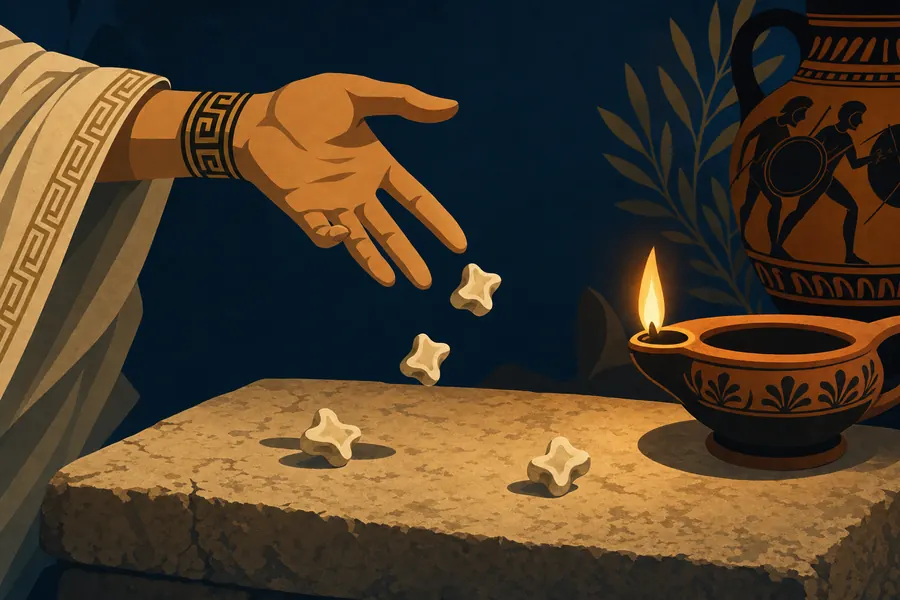
 Originalc. 400 BCE · GreeceKnucklebonesFour sheep bones, four sides worth 1, 3, 4 and 6. Throw them and count.Explore
Family · Dice
Dice games: from knucklebones to the craps table
People threw sheep's ankle bones long before anyone carved a cube. The dice family runs from Greek knucklebones and Roman tali through medieval Hazard to the two dice games every casino still runs today: Craps and Sic Bo. Learn each one, play the originals, then take the modern table.
7 games in the family2,400 years of recorded play2 lines, West and East
The dice family tree
Above, the objects. Here, how each game was played.
Original historical rules Modern casino version Play on this site
WestGreece to New Orleans
Originalc. 400 BCE · GreeceKnucklebonesFour sheep bones, four sides worth 1, 3, 4 and 6. Throw them and count.Explore 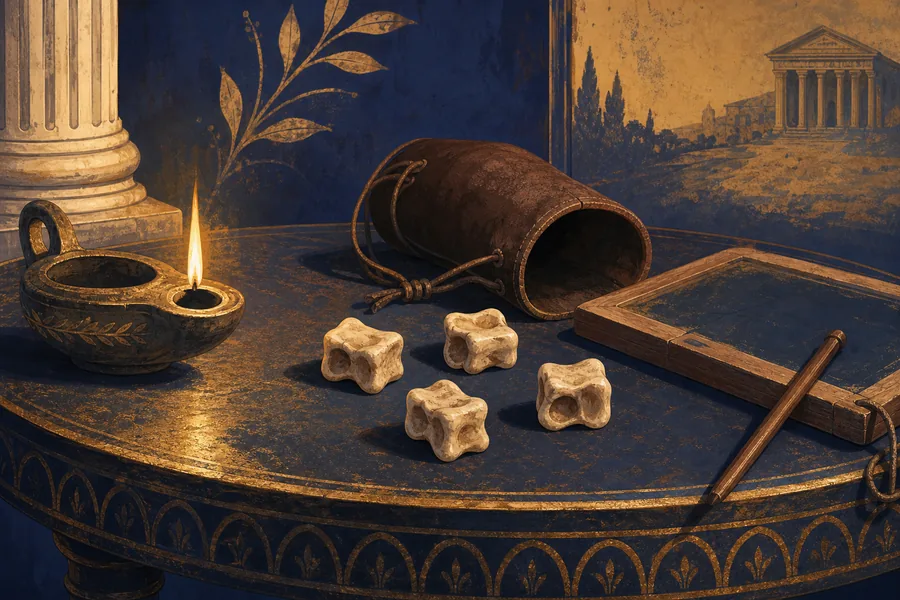 Originalc. 100 CE · RomeTesserae and TaliFour tali at once: four different sides was the Venus, four ones the dog.Explore
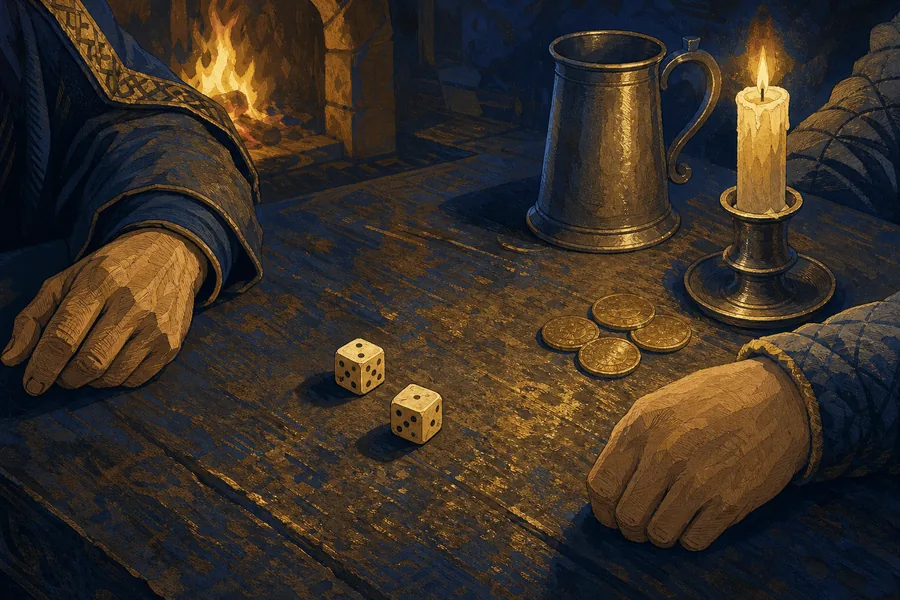 Originalc. 1300 · EnglandHazardThe caster calls a main from 5 to 9, then throws to match it.Play
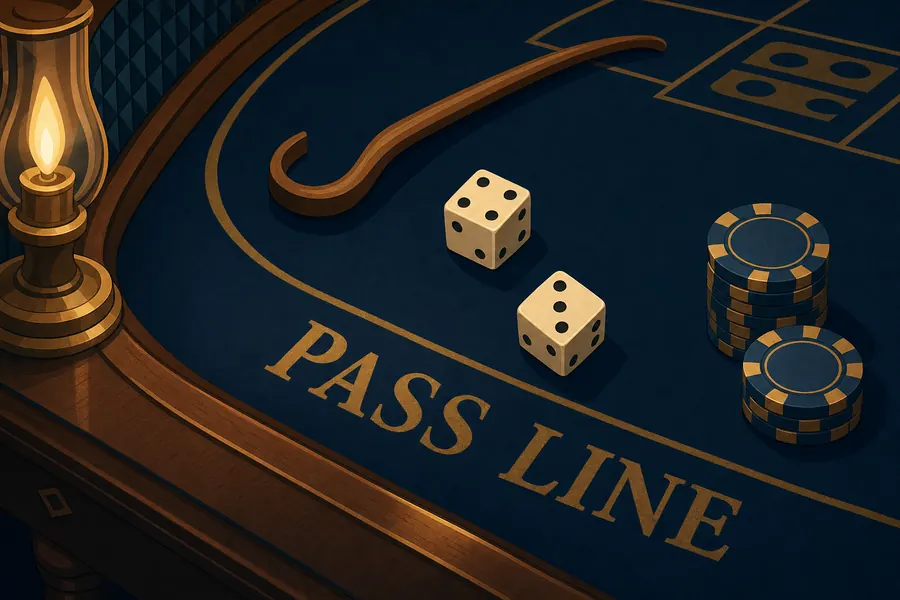 Modernc. 1800 · New OrleansCrapsWin on 7 or 11, set a point, then hit it again before a 7.Play
EastChina to Macau
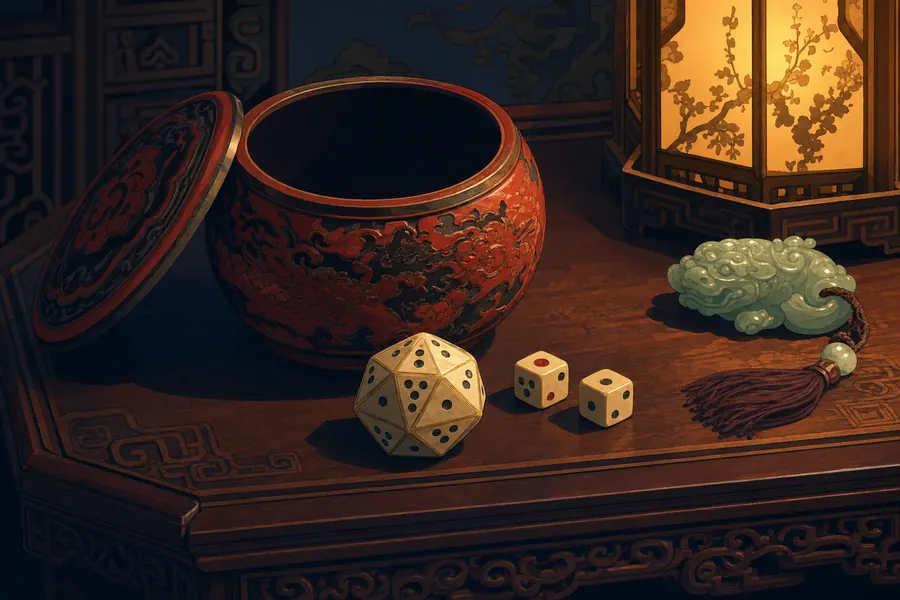 OriginalHan dynasty · ChinaChinese dice gamesAn eighteen-sided die from a Han tomb, probably cast in drinking games.Explore
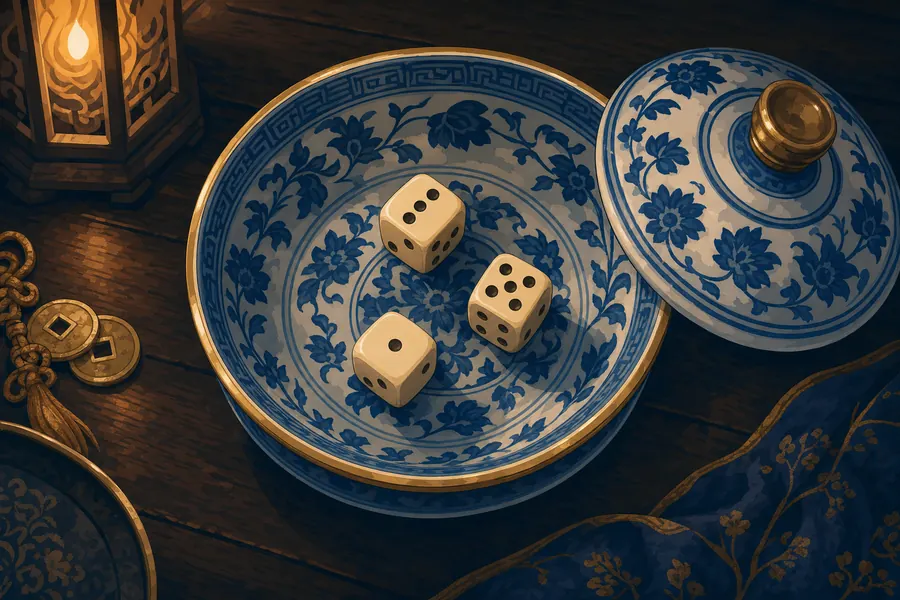 Original1700s · Southern ChinaDai SiuThree dice under a bowl: bet small, 4 to 10, or big, 11 to 17.Explore
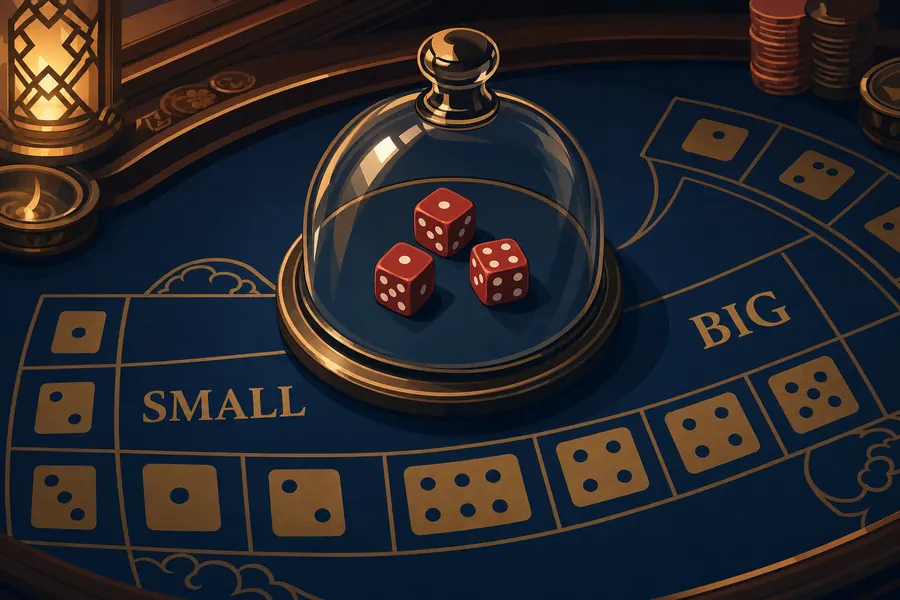 Modern1900s · MacauSic BoBet on totals, triples or Big and Small; 2.78% at best.Explore
Read left to right: each game grew out of the one before. Dates are approximate; the scenes are illustrations, not finds.
Story How dice changed
From ankle bones to six-sided cubes.
Six steps, about four minutes of reading.
IBones with four faces
The first dice were the ankle bones of sheep and goats, the astragali. Thrown on a flat surface, an astragalus can only come to rest on one of its four long sides, and players gave those sides fixed values. The Greeks and Romans counted them as 1, 3, 4 and 6. A throw used four bones at once, and the best result, four different sides, was called the Venus. Four ones, the worst, was the dog.
Bones are not fair. The two broad sides land far more often than the two narrow ones, so the chances were uneven from the start, and every player knew which faces came up most. That uneven chance is why the Venus was rare enough to be prized.
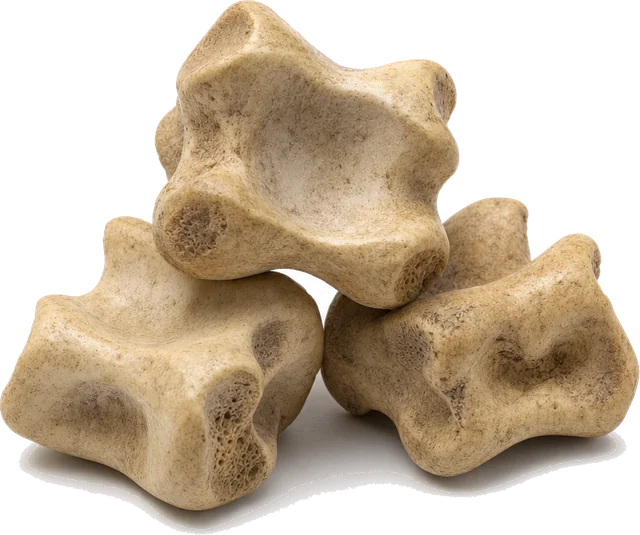
- 1narrow side
rare - 3broad side
common - 4broad side
common - 6narrow side
rare
Broad sides land far more often. Four different sides at once was the Venus.
IIThe cube settles in
Cubic dice appear in the ancient Near East and the Indus valley, and by Roman times the six-sided die, the tessera, was ordinary. Romans played with both: tali for the old four-sided throws, tesserae for games that needed six values. Many surviving Roman dice already follow the rule that opposite faces add up to seven, the same layout on every die sold today.
Not every Roman die was honest. Excavations have turned up dice with uneven faces or weights inside, which tells us that cheating is as old as the game.
Excavations have turned up dice with weights inside. Cheating is as old as the game.
IIIHazard: rules on top of chance
Medieval Europe turned two dice into a game with a structure. In Hazard, the caster first names a number from 5 to 9, the main, and then throws. Depending on the main, some first throws win at once, some lose at once, and anything else becomes the chance, which the caster must throw again before the main comes up. The game was common enough in English taverns by the 14th century for Chaucer to warn against it.
IVCraps strips it down
When Hazard reached New Orleans around 1800, the rules lost their main. The new game fixed the numbers instead: 7 or 11 wins on the first throw, 2, 3 or 12 loses, and anything else becomes the point. The name came from crabs, the old word for the losing low throws. In the early 20th century bank craps let the house take every bet, and the layout casinos still use was born.
| Hazard, c. 1300 | Craps, c. 1800 | |
|---|---|---|
| Target | The caster names a main, 5 to 9 | Fixed: 7 or 11 win at once |
| Instant loss | Depends on the main | 2, 3 or 12 |
| Otherwise | The chance, thrown again before the main | The point, thrown again before a 7 |
| Who banks | Players against each other | The house, from the early 1900s |
VThe Eastern line: three dice under a lid
In southern China a different game grew around three dice shaken in a covered bowl. Players bet on the total being big or small, on single numbers and on triples. Under the name Sic Bo, which means precious dice, it travelled with Chinese communities to Macau and later onto casino floors everywhere, where its lit-up table is a cousin of the craps layout rather than a descendant.
Sic Bo means precious dice. It travelled with Chinese communities to Macau, then onto every casino floor.
VIWhy seven matters
Two six-sided dice can land in 36 equally likely ways. Six of them make a total of 7, more than any other number, so 7 comes up once every six throws on average. A 2 or a 12 can only happen one way each, once in 36 throws. Almost every rule in Hazard and craps is built around that one fact, and almost every house edge in the casino comes from paying a little less than those odds deserve.
The odds
6/36
ways to throw a 7
= once in every six throws
- ⚀⚅1+6
- ⚁⚄2+5
- ⚂⚃3+4
- ⚃⚂4+3
- ⚄⚁5+2
- ⚅⚀6+1
1/36
ways to throw a 2, or a 12
The 36 throws
234567345678456789567891067891011789101112
Every total
The curve peaks at 7 and falls away to both ends.
7 comes up once in six throws. 2 and 12 once in 36.
Questions and further reading
Dice questions
Short answers on the oldest game pieces we know.
What were the first dice made of?
Animal bones. The ankle bones of sheep and goats, called astragali or knucklebones, were thrown long before anyone carved a cube, and they only have four sides a throw can rest on.
Why do opposite sides of a die add up to seven?
It is a convention that goes back to Roman dice and spread everywhere. It also makes a die easier to check, because the 1 always sits opposite the 6, the 2 opposite the 5 and the 3 opposite the 4.
Which total is most likely with two dice?
Seven. Six of the 36 possible combinations add up to 7, so it shows up once in every six throws on average. Six and eight follow with five combinations each.
Is Sic Bo related to craps?
As a cousin, not a descendant. Craps comes from the European Hazard line; Sic Bo comes from Chinese three-dice games. Both reached casinos as table games with their own layouts.
Can I play these games here?
Yes. Hazard and Roman dice are playable as originals, and craps has a practice table and quiz in the craps guide. Everything uses play money, with nothing to win or lose.